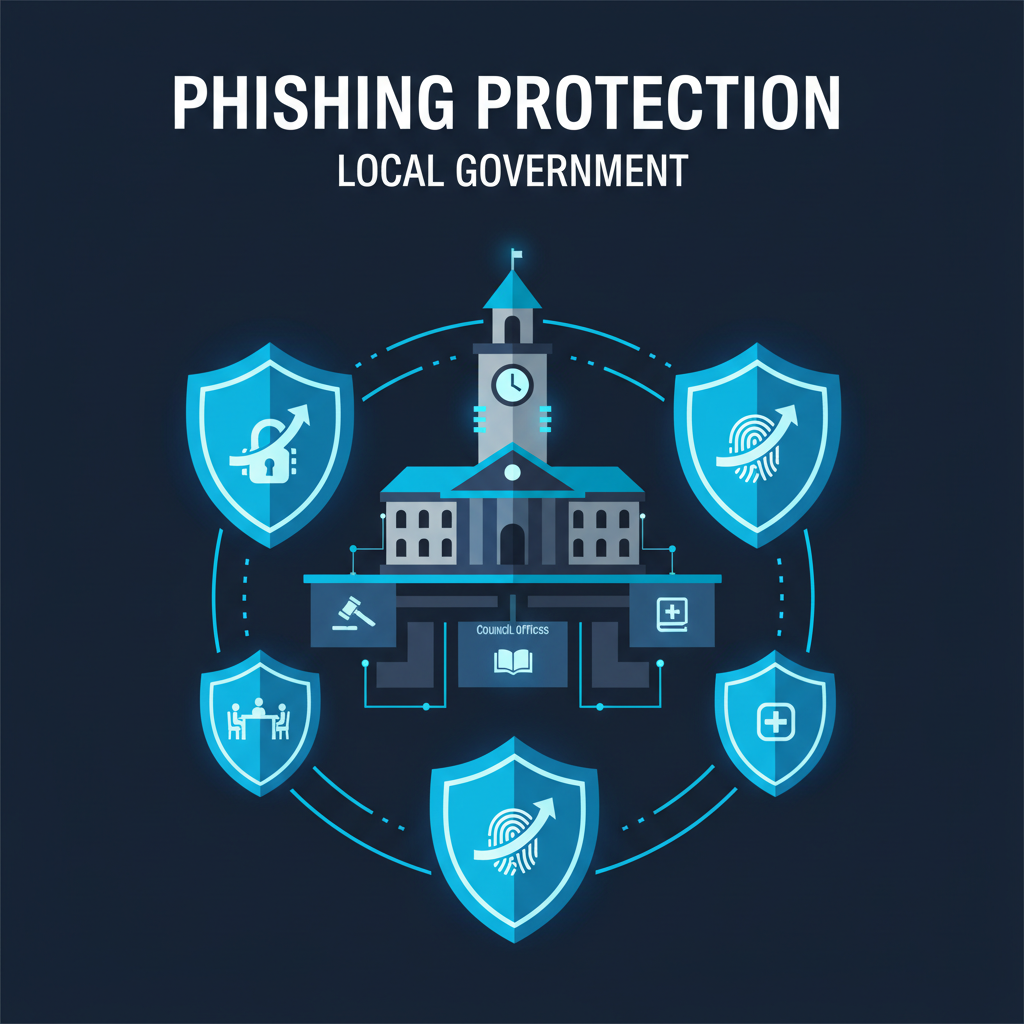
Councils and Local Authorities Continue to Face Increasing Phishing Threats
Local government organisations are heavily targeted because they manage sensitive citizen data, public services, financial systems and operational infrastructure.
Attackers target councils using:
- Credential harvesting attacks
- Fake Microsoft 365 login pages
- Ransomware delivery campaigns
- Phishing attachments
- Impersonation attacks
- Business email compromise
Councils are vulnerable because of:
- Distributed departments
- Hybrid working
- Remote access systems
- Legacy infrastructure
- Limited internal security resources
- High-volume public communications
Phishing risks are caused by:
- Delayed phishing reporting
- Inconsistent user awareness
- Fragmented phishing response workflows
- Overloaded IT teams
- Manual phishing investigations
Wise Fish helps local government organisations improve phishing defence using a unified phishing defence strategy combining campaign detection, AI-powered analysis, human validation, detection & response, and human risk management.
Local Government Requires a Unified Phishing Defence Strategy
Local authorities face unique cybersecurity challenges due to the combination of public services, citizen data, distributed departments and limited security resources.
Modern phishing attacks increasingly bypass preventative controls, making visibility, detection and response critical.
An effective local government phishing defence strategy should combine:
- User Reporting
- Campaign Detection
- AI-Powered Analysis
- Human Validation
- Detection & Response
- Threat Remediation
- Human Risk Management
Together these capabilities help reduce cyber risk, improve resilience and protect essential public services from disruption.
Phishing Attacks Can Disrupt Essential Public Services
Successful phishing attacks can impact far more than IT systems.
A major phishing incident can affect:
- Citizen Services
- Housing Operations
- Revenues and Benefits
- Planning Functions
- Social Care Services
- Internal Communications
The consequences extend beyond cybersecurity and can directly affect service delivery to local communities.
Protecting Local Government Supply Chains and Third-Party Relationships
Local authorities depend on suppliers, contractors, housing providers and third-party service providers to deliver critical services.
Attackers increasingly exploit these trusted relationships using:
- Supplier Impersonation
- Invoice Fraud
- Contractor Compromise
- Business Email Compromise
- Executive Impersonation
Effective phishing defence should include visibility into threats targeting external communications and third-party relationships.
Improve Microsoft 365 Phishing Protection Across Council Environments
Microsoft 365 is heavily used across local government organisations for public communications, collaboration, document sharing and operational services. This creates significant phishing exposure requiring dedicated defence strategies.
Attackers increasingly exploit trusted Microsoft collaboration services, including Outlook, Exchange Online, Microsoft Teams, SharePoint, OneDrive and Microsoft Entra ID, to compromise accounts, disrupt council operations and gain access to sensitive citizen information.
Following successful credential theft, phishing campaigns increasingly target access to citizen portals, revenues and benefits systems, housing management platforms, planning systems, finance applications and case management platforms.
Modern public sector phishing threats increasingly include:
- AI-Generated Phishing
- AI-Assisted Impersonation
- Credential Harvesting
- Business Email Compromise
- QR Code Phishing
- Public Sector Social Engineering
These threats increasingly bypass traditional preventative controls, making visibility and detection capabilities essential.
Exposed roles include:
- Council employees
- Finance teams
- Housing departments
- Executive leadership
- Remote workers
- Operational services teams
Cofense helps improve:
- Campaign intelligence integration
- AI-powered analysis
- Campaign detection
- Detection & response
- Threat remediation
- Human risk management
Campaign Intelligence Improves Public Sector Resilience
Real-world phishing intelligence derived from millions of user-reported phishing emails provides early visibility into campaigns targeting councils, local authorities and public sector organisations.
Campaign intelligence can help organisations:
- Identify Active Phishing Campaigns
- Detect Emerging Ransomware Activity
- Monitor Credential Theft Attempts
- Understand Attacker Behaviour
- Improve Investigation Context
- Accelerate Response Activities
Campaign Intelligence Capabilities
- Identify Active Campaigns
- Detect Ransomware Activity
- Monitor Credential Theft
- Understand Attacker Goals
- Accelerate Response
- Improve Threat Visibility
Reduce Public Sector Phishing and Ransomware Exposure
Many ransomware incidents affecting councils and public sector organisations begin with phishing emails. Local government employees are frequently targeted because they handle public communications, financial operations and citizen data.
Awareness programmes should reflect realistic phishing threats affecting modern public sector environments.
Attackers commonly use:
- Fake payment requests
- Impersonation attacks
- Phishing attachments
- Credential harvesting attacks
- Malicious document links
- Fake Microsoft login pages
Cofense helps improve:
- Behavioural analytics
- Human risk scoring
- Reporting behaviour analysis
- Campaign detection
- AI-powered analysis
- Response capability
The Local Government Phishing Defence Workflow
A connected pathway from council email to protected public services.
- Step 1
Council Email Received
- Step 2
Employee Reports Suspicious Email
- Step 3
AI Investigation
- Step 4
Campaign Detection
- Step 5
Threat Quarantine
- Step 6
Public Services Protected
Campaign Detection and Threat Visibility
Local authorities are frequently targeted by phishing campaigns affecting multiple departments and users simultaneously.
Security teams require visibility into:
- Related Phishing Emails
- Threat Clusters
- Campaign Activity
- Organisation-Wide Attacks
- Campaign Scope
- Response Prioritisation
Campaign visibility enables faster response and stronger protection against phishing attacks.
Campaign Capabilities
- Identify Related Threats
- Cluster Similar Attacks with IOC Analysis
- Understand Campaign Scope
- Prioritise Response
- Track Evolution
- Improve Resilience
Threat Quarantine and Rapid Remediation
When phishing emails reach user inboxes, response speed becomes critical.
Modern phishing defence strategies should include:
- Threat Quarantine
- Automated Email Removal
- Campaign-Wide Remediation
- Threat Containment
- Inbox Investigation
- Reduced Attacker Dwell Time
Rapid remediation helps reduce exposure before attacks spread across departments and services.
Remediation Capabilities
- Threat Quarantine
- Email Removal
- Campaign Remediation
- Threat Containment
- Inbox Investigation
- Reduce Dwell Time
Why Existing Security Controls Are Not Enough
Most councils already deploy multiple security technologies including Microsoft Defender, secure email gateways, endpoint security, identity security and multi-factor authentication.
Despite these investments, phishing attacks continue to bypass preventative controls through social engineering and human-targeted attacks.
Cofense complements existing security investments by improving phishing visibility, investigation, detection and remediation capabilities.
Typical Existing Investments
- Microsoft Defender
- Secure Email Gateways
- Endpoint Security
- Identity Security
- Multi-Factor Authentication
- SOC Services
- SOAR and SIEM Platforms
- DMARC and Zero Trust Controls
Supporting Public Sector Operational Resilience
Local authorities must maintain essential services despite increasing cyber threats.
Effective phishing defence helps organisations:
Effective phishing defence also supports organisations aligning with the NCSC Cyber Assessment Framework (CAF) by strengthening detection, response and operational resilience.
Unified phishing defence also complements the Local Government Cyber Assessment by improving reporting, investigation and incident response capabilities.
- Reduce Ransomware Exposure
- Improve Incident Response
- Protect Citizen Data
- Improve Service Continuity
- Strengthen Operational Resilience
- Improve Organisational Readiness
This makes phishing defence an important component of public sector resilience planning.
Employees as an Early Warning System
Council employees frequently identify suspicious emails before automated systems detect them.
Improving reporting behaviour helps organisations:
- Accelerate Detection
- Improve Threat Visibility
- Reduce Attacker Dwell Time
- Improve Investigation Quality
- Strengthen Organisational Resilience
Employee reporting remains one of the most valuable sources of phishing intelligence available to local authorities.
Reporting Benefits
- Accelerate Detection
- Improve Visibility
- Reduce Dwell Time
- Improve Quality
- Strengthen Resilience
- Enable Response
Implementing Your Phishing Defence Strategy
Local government organisations require more than phishing awareness or email filtering alone.
Effective phishing defence combines user reporting, campaign detection, AI-powered analysis, human validation, detection & response, threat remediation and human risk management.
Together these capabilities create a unified phishing defence strategy that helps councils improve cyber resilience, reduce ransomware risk and protect essential public services.
Unified Strategy Components
- User Reporting
- Threat Intelligence
- AI-Powered Analysis
- Human Validation
- Detection & Response
- Threat Remediation
- Human Risk Management
Support for Modern Enterprise Environments
While many local authorities operate Microsoft 365 environments, phishing attacks also target organisations using Google Workspace and other collaboration platforms.
Wise Fish positions unified phishing defence as relevant across modern public sector environments and collaboration platforms, enabling organisations of any size to improve threat visibility, detection capabilities and operational resilience.
Supporting Councils with Council Phishing Protection and Public Sector Defence
Wise Fish supports councils, public sector organisations and enterprise security teams deploying Cofense-powered phishing defence solutions combining campaign intelligence, AI-powered analysis, human validation, campaign detection and threat remediation.
We help organisations improve:
- Campaign intelligence integration
- Unified phishing defence strategies
- Behavioural analytics and human risk scoring
- Campaign detection and visibility
- Threat remediation and containment
- Operational resilience
What we provide:
- UK Cofense distribution and enablement
- Public sector specialists
- Operational resilience consultancy
- Campaign intelligence guidance
- Enterprise deployment support
- Support for councils and local authorities
Local Government Phishing Protection FAQs
UK Cofense Authorised Distributor
Authorised Cofense distribution for UK public sector.
Public Sector Cybersecurity Specialists
Sector-focused phishing defence knowledge.
Microsoft 365 Experts
Deep Microsoft 365 phishing protection experience.
Local Government Experience
Support across councils and local authorities.
Enterprise Deployment Support
Large-scale Cofense rollout and support.
UK & European Coverage
Local support across the UK and Europe.