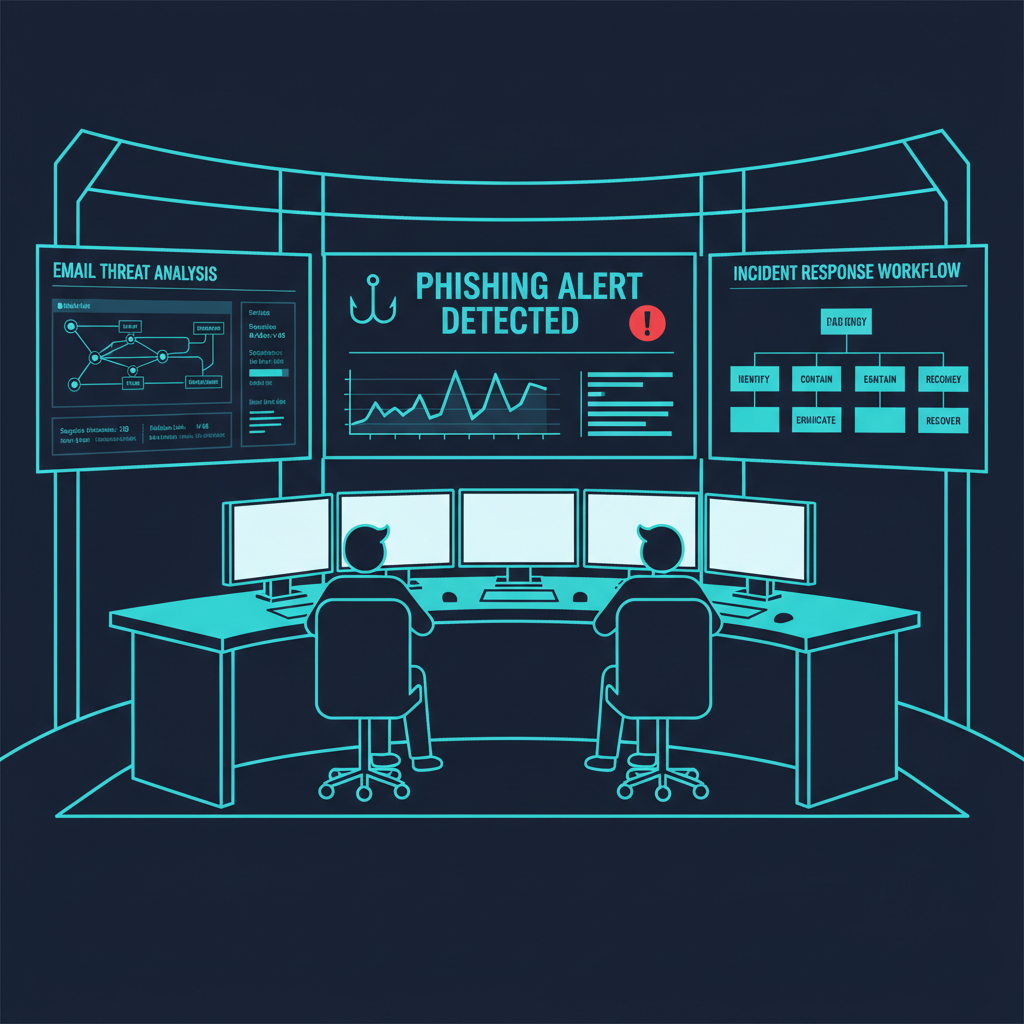
Phishing Detection & Response
From Detection to Remediation
Defend against phishing through AI-powered detection, automated threat triage, threat autoquarantine and one-click threat removal, with live, human-verified intelligence that complements your SEG and Microsoft 365 security.
What Is Phishing Detection and Response?
Phishing Detection and Response (PDR) identifies, investigates and remediates phishing attacks that reach employee inboxes despite existing controls. Unlike preventative email security, which focuses on blocking messages before delivery, PDR addresses threats that have already landed, combining AI-powered triage, autoquarantine, one-click removal and human-verified threat intelligence.
The goal is to reduce the time between detection and remediation while improving organisational visibility across enterprise email environments.
Leading PDR platforms combine AI analysis with human validation. AI identifies patterns, clusters related threats and accelerates investigations, while human analysts add context for sophisticated campaigns.
This approach typically combines:
- User phishing reporting
- Threat validation and triage
- Phishing investigation workflows
- Threat intelligence enrichment
- Email remediation
- Phishing incident response integration
Why Traditional Email Security Is No Longer Enough
Most organisations have strong preventative controls. Yet phishing attacks still get through, because attackers have adapted.
Technologies most organisations already have:
- Secure Email Gateways (SEGs)
- Microsoft 365 Security
- DMARC, SPF & DKIM
- Native Cloud Filters
- Endpoint Protection
- Multi-Factor Authentication
Attack techniques that bypass preventative controls:
- Business Email Compromise
- Executive impersonation
- QR code phishing (Quishing)
- AI-generated phishing content
- Credential harvesting
- Compromised account abuse
How phishing bypasses controls and how post-delivery detection closes the gap:
Internet
Secure Email Gateway
Microsoft Defender
Employee Inbox
Employee Reports Email
Cofense AI Triage
Threat Clustering
Mailbox Remediation
Threat Intelligence
Organisation Protected
The Phishing Detection and Response Lifecycle
Five stages, from initial detection to continuous improvement.
Detection
Threats identified through user reporting, AI analysis and threat intelligence.
Validation
Automated triage and human validation confirm genuine threats and reduce false positives.
Investigation
Campaign detection and threat clustering reveal attack scope and affected users.
Remediation
Threat quarantine and mailbox removal limit exposure and reduce dwell time.
Improvement
Behavioural feedback and analytics strengthen phishing resilience over time.
Common Challenges Organisations Face
Without structured phishing detection and response capabilities, organisations often struggle with visibility, speed and operational overhead.
Limited Phishing Visibility
Security teams lack insight into phishing emails that reach user inboxes.
Delayed Phishing Reporting
Employees may not know how or where to report suspicious emails.
Manual Investigations
Analysts spend significant time reviewing reported emails and determining severity.
Alert Fatigue
Large volumes of reported messages overwhelm security teams.
Slow Remediation
Manual email removal delays containment and increases exposure.
Phishing Reporting as a Detection Layer
One of the most effective ways to improve phishing visibility is through user-driven phishing reporting. Employees often identify suspicious emails before security technologies do.
Simple, accessible reporting increases threat visibility, improves detection speed and supports phishing investigations.
Why Employee Reporting Matters
Illustrative figures. Actual results vary by environment and deployment.
Phishing Triage and Investigation
As reporting volumes increase, organisations require efficient methods for analysing and prioritising reported threats. Phishing triage helps security teams prioritise genuine threats, automate repetitive analysis and accelerate incident response.
Today's triage platforms use AI to identify patterns across reported threats, cluster related emails and accelerate campaign detection. They integrate with SOAR and SIEM workflows, letting teams investigate entire campaigns through a single workflow rather than one email at a time.
Email Remediation
Detection alone is not enough. Once a phishing attack has been identified, organisations must be able to contain and remove malicious messages quickly to reduce exposure across Microsoft 365 and enterprise email environments.
Today's remediation platforms let teams quarantine threats, remove malicious emails from all mailboxes and remediate multiple campaigns simultaneously. This significantly reduces attacker dwell time compared with manual inbox investigation.
Microsoft Defender and Cofense Work Better Together
Microsoft Defender
- Email filtering
- Malware detection
- URL scanning
- Pre-delivery protection
Cofense
- User reporting
- AI triage
- Threat clustering
- Inbox remediation
- Live threat data
Enterprise Email and Microsoft 365 Phishing Detection
Microsoft 365 remains one of the most heavily targeted business platforms. However, phishing attacks affect organisations across multiple email and cloud collaboration environments.
Phishing detection and response solutions complement Microsoft Defender, Proofpoint, Mimecast and other email security technologies by providing additional visibility into threats that bypass preventative controls.
This aligns with Cofense's post-perimeter phishing defence approach, helping organisations identify and respond to threats that reach employee inboxes regardless of the email security stack in place.
How Cofense Supports Phishing Detection and Response
Cofense provides technologies that support phishing detection and response strategies, helping organisations improve:
Campaign Detection and Phishing Investigation at Scale
Phishing campaigns evolve rapidly, and static indicators alone cannot keep pace with modern attacker techniques.
Real-world signals from user-reported emails across millions of mailboxes provide visibility into active campaigns as they occur.
Campaign correlation helps organisations identify related attacks, understand attacker behaviour and respond more effectively.
Key benefits:
Why Phishing Detection and Response Matters
Organisations that rely solely on preventative technologies may struggle to identify attacks that successfully reach users.
Reduce Phishing Risk
Detect threats that bypass email filtering before they result in credential theft or fraud.
Improve Threat Visibility
Gain operational insight into phishing attacks targeting your email environment.
Reduce Analyst Workload
Automated analysis, triage and campaign detection help security teams focus on genuine threats.
Improve Campaign Visibility
Identify phishing campaigns rather than isolated emails, improving investigation scope.
Accelerate Remediation
Quarantine and remove malicious emails faster, reducing attacker dwell time.
Strengthen Post-Perimeter Defence
Improve protection against threats that bypass existing email security controls.
How Wise Fish Supports Phishing Detection and Response
As the UK authorised distributor for Cofense, Wise Fish helps organisations strengthen phishing detection and response capabilities across enterprise email environments.
How we help
What we provide
Phishing Detection and Response FAQs
Strengthen Your Phishing Detection and Response Strategy
Wise Fish helps organisations bring phishing reporting, triage, remediation and incident response together, strengthening phishing resilience across enterprise email.