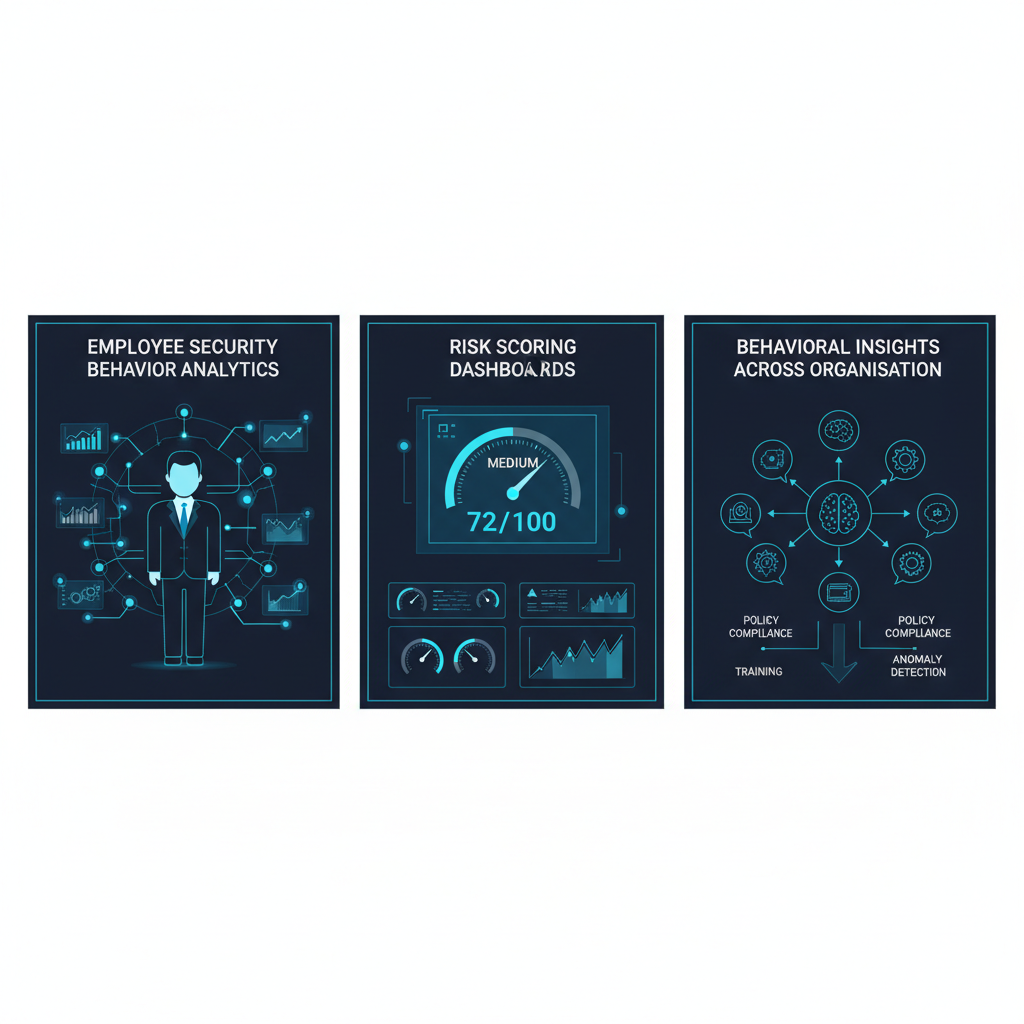
What Is Human Risk Management?
Human Risk Management is the process of identifying, measuring and reducing security risks associated with employee behaviour. Rather than viewing users as the weakest link, it recognises that employees can become an active defence layer.
The goal is a security-aware workforce that contributes to organisational resilience, not one that simply completes annual compliance exercises.
Modern programmes focus on behavioural analytics and measurable risk reduction, rather than training completion rates alone. A typical programme includes:
- Security awareness education
- Phishing simulations
- User reporting
- Behavioural analytics
- Risk measurement
- Continuous improvement
Traditional Security
- Annual compliance training
- Generic awareness
- Technology-led
- Reactive response
Human-Centric Security
- Behavioural improvement
- Risk-based education
- Active employee reporting
- Continuous risk reduction
Why Human Risk Management Matters
Attackers increasingly target people rather than technology. Employees often represent the final layer of defence when phishing bypasses traditional controls.
- Phishing emails targeting all staff
- Business Email Compromise (BEC)
- Executive impersonation and CEO fraud
- Invoice fraud and supplier compromise
- Smishing (SMS phishing) attacks
- QR code phishing (Quishing)
- AI-generated phishing and deepfake social engineering
- Multi-channel phishing campaigns
AI now enables attackers to create highly convincing content at scale, driving investment in behavioural resilience rather than awareness alone.
- Increased phishing susceptibility over time
- Poor reporting and delayed detection
- Credential theft and account compromise
- Financial fraud and invoice losses
- Increased operational and regulatory risk
- Weakened security culture organisation-wide
Understanding Employee Cyber Risk
Human cyber risk refers to the likelihood that employee actions may contribute to a security incident. Not all employees present the same level of risk. Effective programmes identify where risk is highest and focus resources accordingly.
Effective programmes identify high-risk groups, vulnerable departments and reporting gaps, focusing training where it matters most.
The Evolution of Cybersecurity Strategy
Traditional cybersecurity focused on firewalls, antivirus, email filtering, endpoint protection, identity management and Zero Trust architectures. While these technologies remain essential, they cannot prevent every phishing attack.
Behavioural Analytics and Risk Measurement
Behavioural analytics identifies risk patterns, measures user behaviour and reveals where targeted interventions deliver the greatest impact. Programmes commonly measure:
Reporting Behaviour
How consistently employees report suspicious emails.
Click Behaviour
Which users interact with simulated phishing content.
User Risk Scores
Individual risk scores based on behaviour and reporting.
Department Risk Trends
Risk levels compared across teams and departments.
Repeat Risk Patterns
Users who repeatedly demonstrate high-risk behaviour.
These insights help organisations prioritise resources and track improvement over time.
Human Risk Analytics Support
Risk Identification
Locate high-risk user groups and vulnerable departments.
Trend Analysis
Monitor human risk trends over time and across teams.
Targeted Interventions
Focus training where risk is highest and impact is greatest.
Success Measurement
Track behaviour improvement and risk reduction outcomes.
Human Risk as Part of a Unified Defence Strategy
Human risk programmes deliver the greatest value when integrated with reporting, campaign detection, investigation and threat remediation.
The Four Pillars of Human Risk Management
Effective programmes combine awareness, measurement, reporting and intelligence to reduce employee cyber risk.
Security Awareness Training
Help employees recognise phishing attacks, identify social engineering tactics and develop safer security habits through targeted education.
Phishing Simulations
Measure employee susceptibility to phishing attacks. Identify high-risk groups and track behavioural improvement over time.
Phishing Reporting
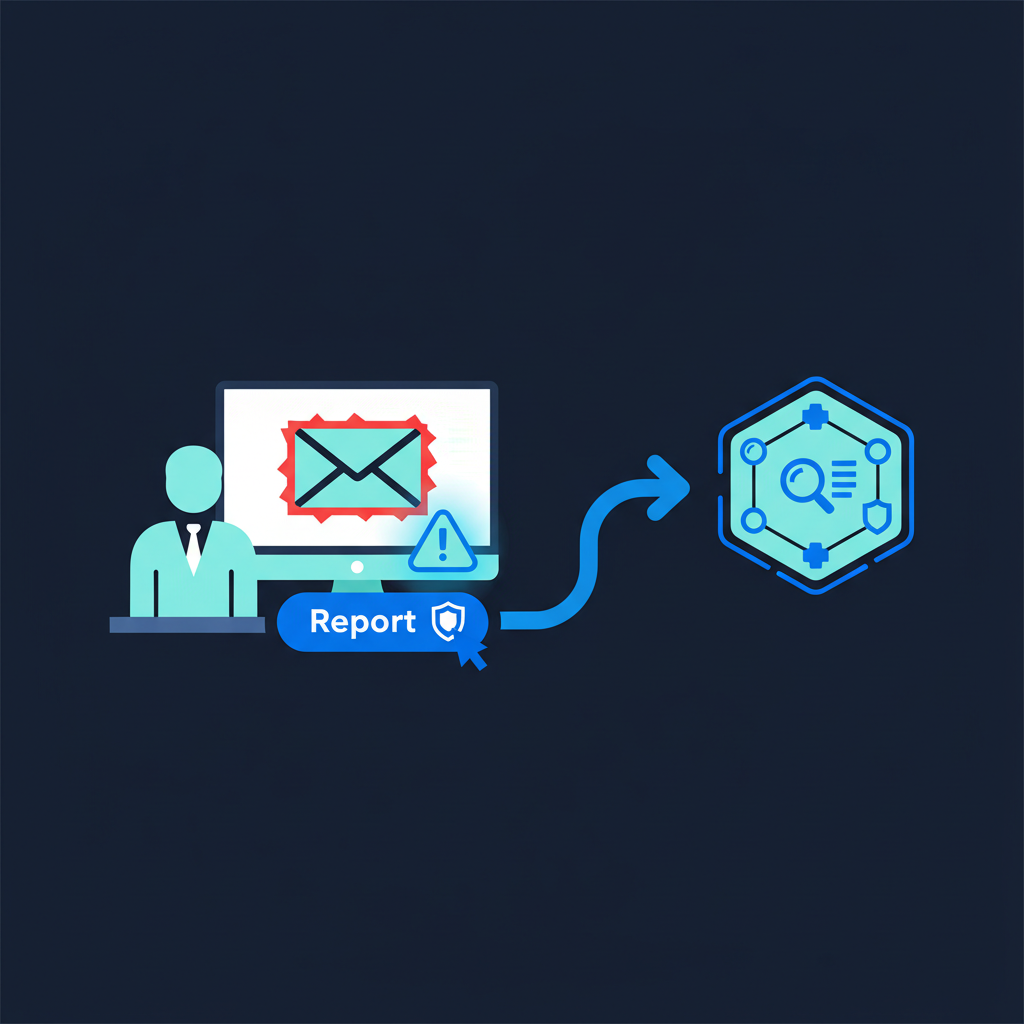
Enable employees to report suspicious emails quickly. Employee reporting is one of the strongest indicators of security culture maturity.
Campaign Intelligence
Provide visibility into emerging phishing threats. Ensure training content reflects real-world attack techniques targeting your organisation.
Reporting as a Human Risk Indicator
Reporting behaviour is one of the strongest indicators of security culture maturity. Employees who report suspicious emails help detect threats earlier, improve visibility and accelerate investigations.
High reporting participation correlates with stronger defence maturity. Programmes track reporting rates, speed, participation and detection effectiveness as key success metrics.
Illustrative figures. Actual results vary by environment and deployment.
The Intelligence Feedback Loop
When users identify and report suspicious activity, they contribute intelligence that improves detection, investigation and response.
This creates a continuous feedback loop. As reporting improves, organisations gain greater visibility into emerging threats and strengthen overall resilience.
The Intelligence Feedback Cycle
Modern Risk Extends Beyond Email
While email remains the most common delivery method, attackers increasingly target employees across multiple channels.
Programmes should help organisations prepare for:
- Email Phishing
- QR Code Phishing (Quishing)
- SMS Phishing (Smishing)
- Collaboration Platform Attacks
- Business Email Compromise
- Executive Impersonation
- AI-Generated Phishing
- Social Engineering
Understanding risk across multiple channels helps organisations improve overall resilience.
Microsoft 365 and Human Risk
Because employees interact with Microsoft 365 collaboration tools daily, user behaviour becomes a key component of organisational security. Human risk programmes strengthen protection by improving employee awareness and reporting behaviour across these environments.
Human Risk Management complements Microsoft Defender by improving employee decision-making across Outlook, Teams, SharePoint and other Microsoft 365 services.
Strengthening M365 Security Through People
Building a Security-Aware Culture
Technology alone cannot create a secure organisation. Strong security cultures embed safe habits into everyday operations, encouraging employees to take ownership of their role in defence.
Cultural change happens when employees:
How Cofense Supports Human Risk Programmes
Cofense provides the tools to improve awareness, reporting and threat visibility, forming the foundation of a human-centric security strategy.
Additional Cofense Capabilities
Behavioural Analytics
Measure reporting, engagement and risk trends to improve programme effectiveness.
Human Validation
Combine AI-powered analysis with human expertise for higher-quality investigations.
Campaign Intelligence
Ensure simulations and awareness content reflect real-world attacks.
Business Outcomes
Measurable improvements in employee behaviour translate directly into reduced operational and financial risk.
Reduced Human Risk
Lower phishing susceptibility through targeted training and realistic simulations.
Improved Employee Reporting
Employees become an active detection layer, flagging threats before controls do.
Stronger Security Culture
Lasting behavioural change rather than compliance checkbox exercises.
Better Risk Visibility
Measurable insight into behavioural risk and organisational exposure.
Faster Detection & Response
Employee-sourced intelligence accelerates investigation and remediation.
Reduced Organisational Risk
Behavioural improvement translates directly into lower operational and financial exposure.
Modern attacks target people, not just technology. Organisations that manage human risk detect, respond to and recover from phishing attacks faster.