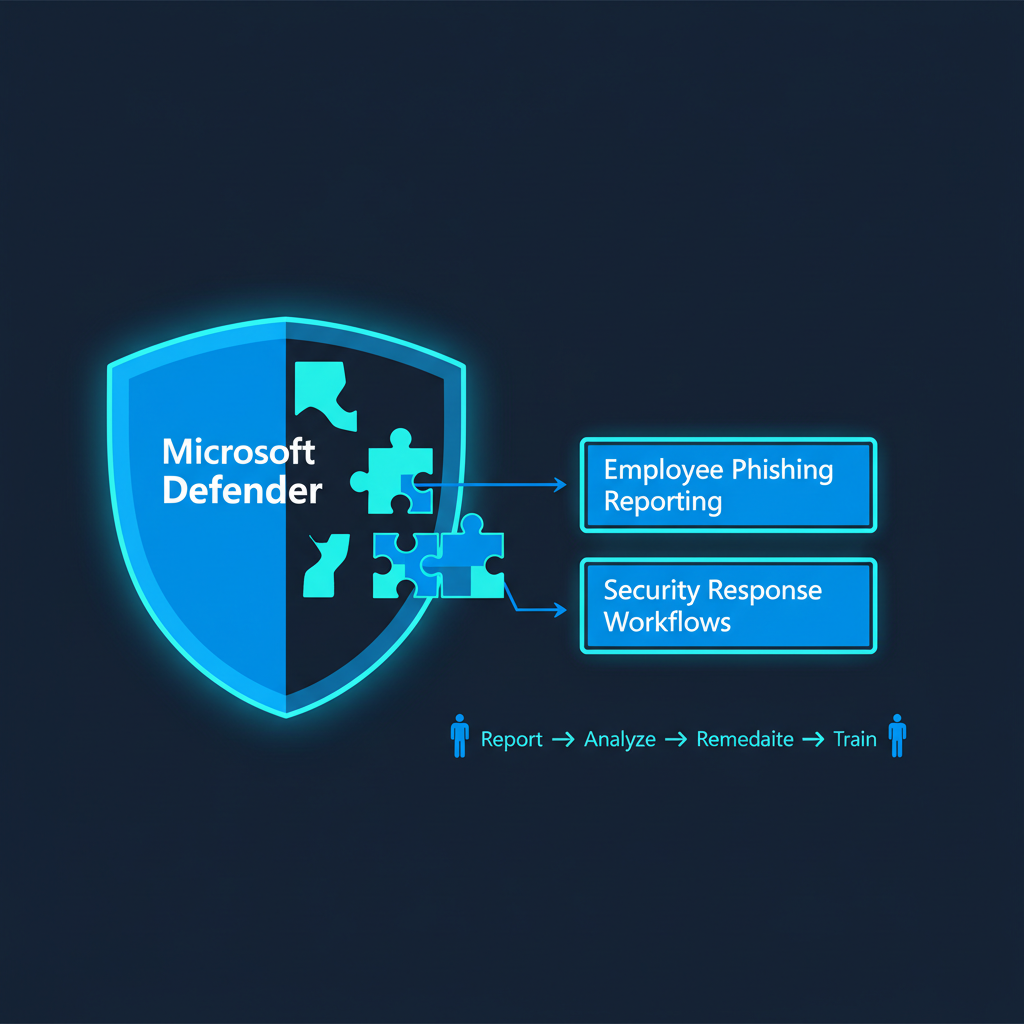
Understanding the Different Security Approaches
Both Cofense and Microsoft Defender for Office 365 help organisations reduce phishing risk, but they focus on different parts of the defence lifecycle.
Microsoft 365 environments remain one of the most heavily targeted attack surfaces. Most organisations already use Defender for Office 365 as part of their native Microsoft security stack, but modern attacks increasingly rely on social engineering and user interaction rather than technical exploits alone.
Understanding the different approaches helps enterprise buyers evaluate which platform aligns with their security strategy, existing technology and operational maturity. Modern defence spans filtering, user reporting, threat investigations, campaign visibility, rapid remediation and human risk reduction.
Where Each Platform Excels
Both platforms bring distinct strengths to enterprise phishing defence programmes.
Microsoft Defender for Office 365 is recognised for:
- Native Microsoft 365 integration
- Email threat filtering
- Malicious link and attachment scanning
- Endpoint and identity security
- DMARC and Zero Trust controls
- SOC and SIEM integration
Cofense is recognised for:
- One-click employee reporting
- Phishing investigation workflows
- Campaign detection and intelligence
- Inbox remediation
- Human risk management
- Operational response maturity
Many enterprise organisations deploy both approaches as complementary layers rather than choosing between them.
Detection Philosophy
The two platforms approach phishing detection from different angles within the defence lifecycle.
Microsoft Defender
Emphasises preventative email filtering, malicious link and attachment analysis, identity security and native ecosystem controls across the enterprise productivity environment.
Cofense
Combines employee reporting with phishing-specific AI, human validation, campaign intelligence and analyst workflows designed for post-delivery investigation.
Modern attacks increasingly bypass preventative controls through social engineering, credential harvesting and fake Microsoft login pages, meaning user reporting remains an important source of detection even when automated filtering is in place.
Investigation & Response
Modern phishing defence is no longer solely about stopping malicious emails before they reach users.
Microsoft Defender supports:
- Automated threat filtering
- Link and attachment analysis
- Endpoint detection and response
- Identity protection workflows
- Cloud application visibility
Cofense supports:
- Rapid phishing reporting
- Threat investigations
- Campaign correlation
- Inbox remediation
- Operational visibility
- Security team workflows
- SOC, SOAR and SIEM integration
While preventative filtering reduces the volume of malicious emails reaching users, post-delivery detection and response helps organisations investigate suspicious emails, understand attack scope and respond quickly when threats bypass native controls.
Human Risk & Employee Reporting
Technology alone cannot eliminate phishing risk. Modern defence also depends on employees recognising and reporting suspicious messages quickly.
Cofense supports this through one-click reporting, phishing defence training, simulations and human risk management, creating a continuous feedback loop where employee reporting contributes to faster investigations, improved campaign intelligence and stronger organisational resilience.
The feedback loop
Employee reporting feeds directly into investigations, campaign intelligence and remediation, creating faster response, stronger resilience and reduced human risk over time. This continuous cycle strengthens operational defence maturity across the organisation.
Enterprise Operations
Both platforms are designed for enterprise deployment, with different operational considerations for security teams.
Microsoft Defender enterprise capabilities:
- Native Microsoft 365 deployment
- Defender for Office 365 integration
- Endpoint and identity security
- SOC and SIEM alignment
- DMARC and Zero Trust controls
- Microsoft ecosystem scalability
Cofense enterprise capabilities:
- SOC-aligned workflows
- SIEM and SOAR integration
- Microsoft 365 phishing response
- Enterprise deployment scalability
- IOC-aligned investigation processes
- Operational response maturity
Enterprise organisations often evaluate how each platform integrates with existing security operations, SIEM and SOAR investments, and the broader Microsoft ecosystem.
Which Organisations Typically Choose Each Platform?
The right platform depends on organisational priorities, existing technology and operational maturity.
Microsoft Defender is commonly selected by organisations that prioritise:
- Native Microsoft ecosystem protection
- Preventative email filtering
- Endpoint and identity security
- DMARC and Zero Trust alignment
- Microsoft 365 security consolidation
Cofense is often selected by organisations looking for:
- Employee reporting workflows
- Phishing investigations
- Campaign visibility and intelligence
- Inbox remediation
- Human risk management
- Operational phishing response
- SOC, SOAR and SIEM-aligned defence
Many enterprise organisations deploy multiple layers of protection, combining native Microsoft 365 security with post-delivery phishing detection and response capabilities to improve resilience against modern attacks.
Cofense vs Microsoft Defender FAQs
Strengthen Microsoft 365 Phishing Defence
The right defence strategy depends on your security objectives, existing investments and operational maturity. Speak with Wise Fish to evaluate how Cofense can complement your Microsoft ecosystem, strengthening detection, investigations, employee reporting and response capabilities.
Strengthen Microsoft 365 Phishing Defence
Tell us about your Microsoft 365 phishing defence requirements and we'll help you evaluate the right approach.